
In today’s environmentally aware market, consumers, government bodies, and large organizations are giving more importance to products that cause minimal harm to nature. To encourage eco-friendly manufacturing and responsible consumption, the Government of India introduced the ECO Mark scheme.
This is a voluntary eco-label awarded to products that comply with both quality benchmarks and environmental safety standards prescribed by the Bureau of Indian Standards (BIS). Products carrying this label indicate reduced environmental impact throughout their lifecycle—from sourcing raw materials to final disposal.
It allows manufacturers to demonstrate their commitment to sustainability, pollution control, and green production while improving brand trust and market reputation.
ECO Mark is an environmental labeling program launched by the Government of India and administered by the Bureau of Indian Standards (BIS) in consultation with the Ministry of Environment, Forest and Climate Change (MoEFCC).
The official symbol of this scheme is an earthen pot (Matka), which represents Indian tradition, simplicity, and environmental responsibility.
To qualify for this certification, a product must:
• Hold a valid ISI license, and
• Fulfill additional environmental performance criteria defined for the product category
This makes it different from standard quality certifications, as it evaluates both product quality and environmental impact.
With rising environmental concerns and strict regulatory frameworks, eco-labeling has become essential for modern businesses. This certification helps manufacturers:
• Show environmental responsibility
• Reduce pollution and waste generation
• Gain preference in government procurement
• Build a sustainable brand identity
Eco-labeled products are considered safer for human health and the environment.
1. Improves Brand Credibility
Builds consumer confidence by highlighting environmental safety and non-toxic manufacturing.
2. Competitive Market Edge
Eco-certified products attract environmentally conscious buyers.
3. Preference in Government Tenders
Many government departments prefer certified sustainable products.
4. Regulatory Alignment
Supports compliance with pollution control laws and sustainability norms.
5. Promotes Sustainable Development
Encourages responsible resource usage and reduced carbon footprint.
1. Voluntary Nature
Since it is not mandatory, many businesses may choose not to apply.
2. Additional Compliance
Requires adherence to both quality and environmental standards.
3. Cost Involvement
Testing, documentation, and audits may increase expenses.
4. Limited Product Scope
Available only for BIS-notified product categories.
This scheme is applicable to selected product categories such as:
• Detergents and household cleaners
• Paper and paper-based products
• Paints, varnishes, and coatings
• Batteries
• Packaging materials
• Cosmetics and personal care items
• Lubricating oils
(Product eligibility depends on BIS notifications and applicable standards.)
1. Business registration certificate
2. Manufacturing unit address proof
3. Factory layout and process flow chart
4. Product specifications
5. BIS-recognized lab test reports
6. Valid ISI license
7. Consent to Establish (CTE)
8. Consent to Operate (CTO)
9. Environmental compliance certificates
10. List of raw materials used
11. Material Safety Data Sheet (MSDS)
12. Energy and water consumption details
13. Waste management plan
14. Authorization letter
Step 1: Eligibility Check
Verify the applicable product category and BIS standard.
Step 2: Application Filing
Submit the application with necessary documents.
Step 3: Product Testing
Testing through BIS-approved laboratories.
Step 4: Factory Inspection
On-site audit to verify compliance.
Step 5: Grant of Certification
The license is issued after successful verification.
productapproval.net offers complete consultancy support for eco-label certification in India. Our services include eligibility assessment, documentation support, BIS application filing, laboratory coordination, factory audit preparation, and post-approval assistance.
We ensure smooth compliance with both quality and environmental standards, helping your products become eco-friendly, market-ready, and legally compliant.
India’s rapidly developing economy enables foreign manufacturers to align with top global standards.
View Services →
ISI certification ensures quality and safety for products sold in the Indian market.
View Services →
India’s rapidly developing economy enables foreign manufacturers to align with top global standards.
View Services →
Scheme X Certification is a conformity assessment system established by the Bureau of Indian Standards (BIS).
View Services →
WPC approval is required for wireless products to operate legally within India.
View Services →
WPC approval is required for wireless products to operate legally within India.
View Services →
The Mandatory Testing and Certification of Telecom Equipment (MTCTE)
View Services →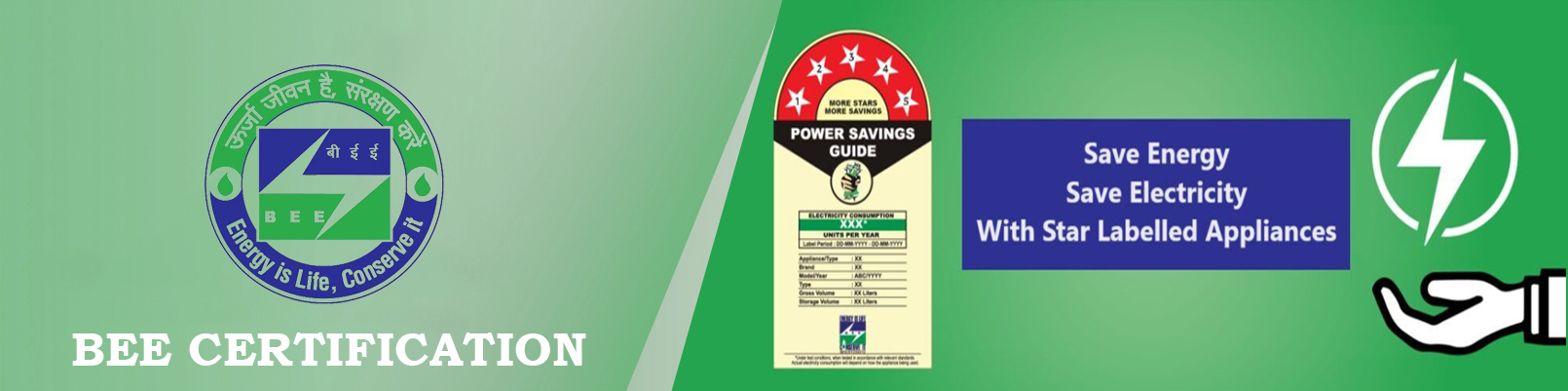
The BEE (Bureau of Energy Efficiency) Certification is primarily related to the energy efficiency and conservation
View Services →
Legal Metrology Packaged Commodities (LMPC) refers to the regulatory framework that ensures accuracy and fairness
View Services →
Electronic waste, commonly called e-waste, refers to discarded electrical and electronic gadgets that have reached the end of their usability.
View Services →
EPR Plastic Waste Management (PWM) refers to the systematic process of handling, recycling, and reducing
View Services →
EPR (Extended Producer Responsibility) Battery Waste Management is a compliance framework under
View Services →
The Food Safety and Standards Authority of India (FSSAI) is a regulatory body under the Ministry of Health & Family Welfare
View Services →
The CDSCO is the national regulatory body for drugs, medical devices, cosmetics, and clinical trials in India.
View Services →
The International Organization for Standardization, commonly known as ISO, derives its name from the Greek word
View Services →Stay updated with our newest news and articles

The Bureau of Indian Standards (BIS) has introduced revised guidelines under......
Read More →
The Guidelines for Implementation of Migration to IS/IEC 62368-1:2023......
Read More →
The Department of Telecommunications (DoT) has released a significant......
Read More →
The Bureau of Indian Standards (BIS) has recently issued revised guidelines for the implementation of IS 18112,
Read More →